Dreaming about stepping out your back door to the water in Upper Grand Lagoon? It is an exciting idea, but waterfront buying here involves more than picking the best view. You also need to understand boating access, permit history, flood considerations, and the upkeep that can come with life near the shoreline. This guide will help you sort through the key details so you can buy with more confidence. Let’s dive in.
Why Upper Grand Lagoon Stands Out
Upper Grand Lagoon offers a distinct middle ground for buyers who want waterfront access in Bay County without automatically shopping in the area’s highest-priced segment. According to the U.S. Census Bureau’s Upper Grand Lagoon profile, the median owner-occupied home value is $373,200, compared with $310,500 in Bay County and $441,300 in Panama City Beach.
That pricing context matters if you want to balance lifestyle and budget. You may find an appealing mix of waterfront opportunity, boating convenience, and proximity to coastal amenities, while still keeping more options open than in some higher-priced nearby markets.
Upper Grand Lagoon is also a sizable residential community. The Census Bureau reports 15,778 residents in 2020 and an owner-occupied housing rate of 62.3%, which helps frame the area as an established place where people live full-time as well as own second homes.
What Waterfront Means Here
In Upper Grand Lagoon, waterfront is often about boat convenience as much as scenery. A practical way to think about local options is a spectrum of canal-front, lagoon-front, and marina-adjacent properties.
That distinction can shape your daily use of the property. Some buyers want the ease of keeping a boat close to home, while others care more about views and are comfortable relying on nearby public launches or marinas.
According to Panama City Beach marina information, local marinas on and around Grand Lagoon offer access to St. Andrew Bay and the Gulf. That makes this area especially appealing if your version of waterfront living includes boating, fishing, or easy days on the water.
St. Andrews State Park adds to that access. The park notes that it has a double-sided concrete boat ramp and boating access to St. Andrews Bay, Shell Island, and the Gulf inlet, with options for kayak, pontoon, and shuttle trips. Since Shell Island can only be reached by boat, proximity to this network is a real lifestyle advantage.
Compare Waterfront Property Types
Canal-front homes
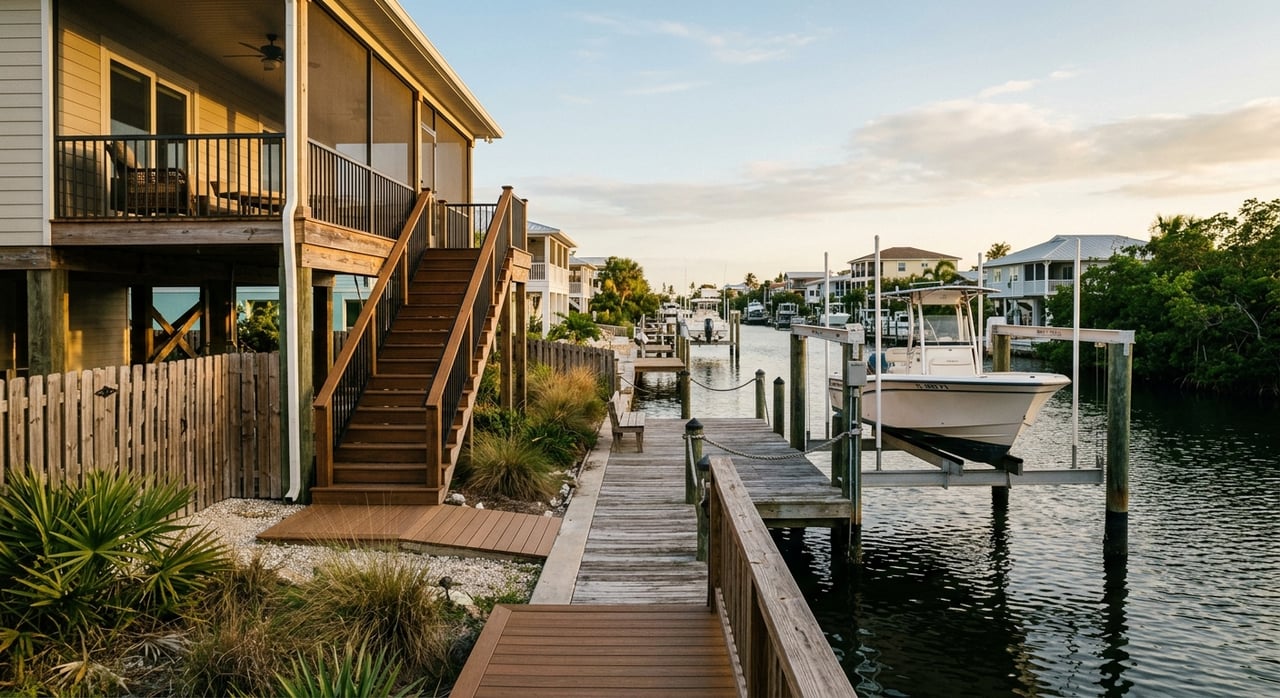
Canal-front homes often appeal to buyers focused on practical boating access. Depending on the property, you may find features like dock space or the potential for a private setup, but your due diligence should confirm what is actually permitted and usable.
These homes can be a strong fit if you prioritize getting on the water quickly. They may also involve more hands-on maintenance tied to docks, lifts, seawalls, and shoreline improvements.
Lagoon-front homes
Lagoon-front homes may attract buyers who want a broader water view and a more direct connection to Grand Lagoon itself. These properties can feel more like classic waterfront ownership, but that can also mean a larger maintenance and insurance conversation.
If you are considering lagoon-front property, it is smart to look closely at elevation, shoreline condition, and flood-related costs early in the process. Those numbers can affect affordability more than buyers expect.
Marina-adjacent homes
Marina-adjacent homes offer a different value proposition. Instead of maintaining your own full waterfront setup, you may be able to enjoy the area’s boating network while relying more on marina services or public launch access.
For some buyers, that is the best balance of lifestyle and simplicity. If you want easier access to the water with less private infrastructure to manage, this category is worth serious consideration.
Private Dock or Lower-Maintenance Access?
One of the biggest decisions in Upper Grand Lagoon is whether you want a true private-waterfront property or a home that keeps you close to the boating lifestyle without requiring as much upkeep.
A private dock setup may offer convenience and a stronger waterfront feel, but it also raises the stakes for inspections, permits, and maintenance planning. A nearby-marina or public-ramp approach can reduce some of that burden while still giving you access to the water-oriented lifestyle that draws many buyers here.
Here is a simple way to compare the two:
| Option | Potential Advantages | Things to Review |
|---|---|---|
| Private dock potential | Direct boat access, more private waterfront use, strong lifestyle appeal | Permit history, dock condition, seawall condition, lift status, maintenance costs |
| Marina or public-ramp access | Lower private maintenance, easier ownership experience, boating flexibility | Launch convenience, storage options, distance to marinas, day-to-day practicality |
Check Permits Before You Fall in Love
Waterfront features can look great in photos, but permit history should be part of your early review. In Bay County, dock and seawall work requires a permit for new construction and for structural changes or repairs.
That means a buyer should not assume an existing dock, lift, or seawall was handled correctly just because it is already there. Bay County also notes that permit documents can be searched by address, which makes this a practical due diligence step during a purchase.
At the state level, the Florida Department of Environmental Protection’s ERP guidance explains that some single-family dock projects may be self-certified as exempt. That can include some new docks, repairs or replacements, and the addition of a boat lift to an existing dock. However, if wetlands are affected, an Environmental Resource Permit is required.
The key takeaway is simple: a waterfront property may involve more than one permitting conversation. What seems straightforward from the street can become more complex once shoreline work or submerged lands are involved.
Ask These Waterfront Due Diligence Questions
Before you move forward on a waterfront purchase, ask targeted questions that can help you avoid expensive surprises later.
Permit and document questions
- Is the dock permitted?
- Is the seawall permitted?
- Is the boat lift permitted, if there is one?
- Are there any open or expired permits tied to the property?
- Is an elevation certificate available?
Bay County states that it keeps elevation certificates from 2007 onward, and its permit portal is designed for address-based document review. That can be especially useful if you want a clearer picture of prior work completed at the property.
Jurisdiction questions
Permit rules can vary by location. Bay County notes that its permit validity applies to unincorporated areas, while municipalities may have their own requirements, so the parcel’s exact jurisdiction matters before you assume one set of rules applies to every property. You can review that local context through the county’s code enforcement and jurisdiction guidance.
Understand Flood Risk and Insurance
Flood risk should be part of any Upper Grand Lagoon home-buying budget. Bay County says the area is highly prone to flood hazards from hurricanes, tropical storms, and intense rainfall, and it also states that standard property insurance does not cover flood damage.
That is why flood insurance should never be treated as an afterthought. If you are comparing multiple waterfront homes, the structure’s elevation, flood zone context, and available documents may all influence your long-term ownership costs.
Bay County also maintains flood-hazard mapping, storm-surge and evacuation information, and an elevation-certificate archive. The county says its Building Department can answer questions about floor elevations, retrofit planning, and site visits for protection measures, which can help you make a more informed decision before closing.
Why Some Waterfront Homes Sit Higher
If you notice that some waterfront homes are elevated more than expected, there is a reason for that. Bay County explains that when substantial-improvement rules are triggered, residential living areas typically must be raised to or above base flood elevation.
For buyers, this matters in two ways. First, elevation can affect how a home looks, functions, and accesses the water. Second, it can affect future renovation plans, so it is smart to understand the home’s current compliance posture before you purchase.
Plan for Waterfront Maintenance
Owning near the water can be rewarding, but it also comes with a different maintenance rhythm than inland property. The view, dock access, and shoreline features may be a big part of the appeal, but they should be matched with a realistic plan for upkeep.
A helpful resource comes from UF/IFAS Florida-Friendly Landscaping guidance, which recommends a minimum 10-foot low-maintenance zone around water bodies. In that zone, it advises against mowing, fertilizing, or applying pesticides, and it recommends keeping grass clippings and debris out of storm drains and water bodies.
That guidance is useful for buyers because it shows how waterfront maintenance is not just cosmetic. It can affect shoreline health, stormwater flow, and your long-term ownership responsibilities.
A Smarter Way to Buy Waterfront
The best waterfront purchase in Upper Grand Lagoon is not always the one with the biggest view or the longest dock. It is the one that fits how you want to live, aligns with your budget, and holds up under careful review of permits, flood exposure, and ongoing maintenance.
If you want a clear-eyed, finance-minded approach to buying waterfront in Bay County, working with a local expert can make the process much easier. Ashley Meadows brings boutique service, local market insight, and data-driven guidance to help you evaluate coastal properties with confidence.
FAQs
What makes waterfront homes in Upper Grand Lagoon different from other Bay County options?
- Upper Grand Lagoon offers a middle-ground price point for many buyers, along with strong boating access through canals, Grand Lagoon, nearby marinas, and public launch options.
What should buyers verify about docks and seawalls in Upper Grand Lagoon?
- You should verify whether the dock, seawall, and boat lift were properly permitted, and whether any open or expired permits remain on the property.
What flood insurance issue should waterfront buyers in Upper Grand Lagoon know?
- Bay County states that standard property insurance does not cover flood damage, so you should review flood insurance and elevation-related costs early in your home search.
What does marina-adjacent living mean in Upper Grand Lagoon?
- Marina-adjacent living usually means you are close to boating access and services without owning as much private waterfront infrastructure to maintain yourself.
Why are some waterfront homes in Upper Grand Lagoon elevated?
- Bay County says homes affected by substantial-improvement rules may need living areas raised to or above base flood elevation, which can make some waterfront homes sit higher than buyers expect.